AI infrastructure is not simple anymore. It no longer lives in one clean, centralized data center where every system is easy to reach and every issue can be handled by someone down the hall. Today, AI workloads run across hyperscale data centers, cloud regions, edge sites, labs, manufacturing environments, and remote facilities. Companies like Amazon AWS, Google Cloud, Microsoft Azure, Oracle OCI, Groq, CoreWeave, NVIDIA, Cerebras, and SambaNova are driving massive demand for high-performance AI infrastructure. That growth creates a real operations challenge. The infrastructure footprint keeps expanding, but the tolerance for downtime keeps shrinking. When a switch locks up, a server becomes unreachable, a circuit fails, or a remote site drops offline, teams need a way back in fast.
This is why modern out-of-band management matters. The production network should not be the only path to critical systems. If that network is down, overloaded, misconfigured, or unreachable, engineers need an independent path to troubleshoot and recover. That is the role Gearlinx plays. The Gearlinx NR4400 series, including the NR4416 and NR4448, gives teams secure out-of-band access to critical infrastructure across distributed environments. Teams can connect to network gear, servers, power systems, and other essential equipment even when normal connectivity is unavailable. That access gives engineers the ability to diagnose problems, restore services, reboot equipment, review device status, and take action without being physically present onsite.
AI infrastructure raises the stakes because every outage costs more. GPU clusters, storage systems, high-speed switching, cooling systems, and power infrastructure all need to work together. A small issue can create a large operational problem. A failed update can take down access. A bad configuration can isolate a site. A power event can leave key systems stuck. A remote device can stop responding at the worst possible time. In traditional environments, these problems are frustrating. In AI environments, they can interrupt expensive workloads, delay projects, reduce customer confidence, and waste valuable engineering time. For hyperscalers, cloud AI providers, inference companies, and enterprise AI teams, resilience is not optional. It is part of keeping the business running.
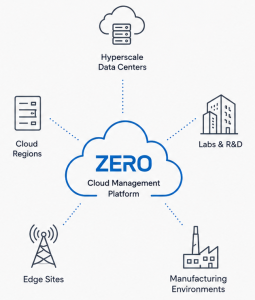
As AI infrastructure spreads across more locations, centralized management becomes just as important as remote access. Teams cannot manage every site as a separate island and expect that model to scale. They need visibility across locations, users, devices, and systems. ZERO, the Gearlinx cloud-based management platform, gives teams one place to manage distributed infrastructure. Instead of relying on disconnected tools or site-by-site processes, teams can bring management into a more organized, scalable platform. ZERO helps simplify operations, improve visibility, and speed response when something goes wrong. For organizations operating AI infrastructure across multiple environments, that kind of centralized control is not just helpful. It becomes necessary.
LTE-enabled options add another layer of resilience. If the main circuit fails, teams still need access. With LTE support, Gearlinx gives engineers an alternate path into the site so they can keep working the problem instead of waiting on a carrier, a local contact, or a truck roll. That matters because downtime is not just an IT issue anymore. It affects workloads, customers, productivity, revenue, and trust. As AI infrastructure continues to scale, the companies that operate it well will be the ones that plan for failure before it happens. Gearlinx gives teams the foundation to do that with modern out-of-band management, LTE-enabled resilience, and ZERO cloud management built for distributed environments.