
5G Solutions are Transformative
5G technology is already becoming mainstream in many parts of the world, with several countries and telecom companies rolling out 5G networks and devices. However, the pace of adoption and availability of 5G services may vary depending on factors such as infrastructure development, device availability, and regulatory approval. In some countries, 5G networks have already been launched, and 5G-enabled devices are widely available. In other countries, the rollout of 5G may still be in progress, and it may take some time before the technology becomes widely available.
It is expected that 5G technology will become increasingly mainstream over the next few years as the infrastructure is built out and more devices become 5G-enabled. By 2025, it is estimated that there will be more than 1.2 billion 5G connections worldwide. The growth of 5G-capable devices is being driven by artificial intelligence (AI), augmented reality (AR), Internet of Things (IoT), machine learning (ML) and Industry 4.0 The movement towards connected ecosystems monitoring and controlling systems and equipment, is all part of the longer-term digital transformation initiative of business applications.
5G doesn’t just promise a faster version of the 4G internet we have now; by some estimates, 5G will spur $1 trillion in global GDP over the next three years. It will change how consumers digest media, purchase products and services, and operate their homes. And in the workplace, 5G underlies immense potential for automation and proliferation of intelligent environments.

Ultra-fast internet, low latency and improved reliability
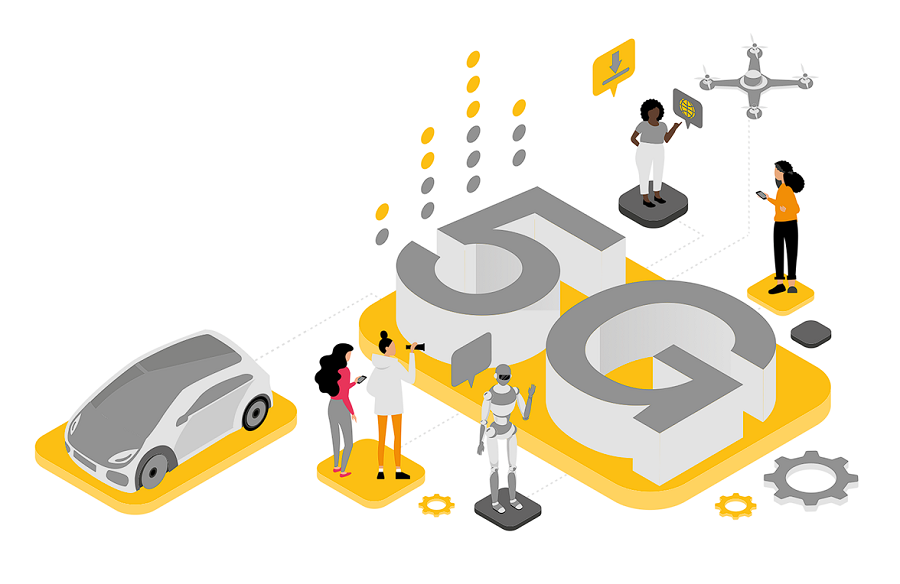
Autonomous vehicles, drones, sensors, robotics, digital signage, virtual reality, in-store apps and more benefit by premium speeds, low latency, and improved dependability. With theoretical speeds for 5G of 20Gbps and 4G LTE of 1Gbps, the difference between the technologies can vary further depending on several factors such as network coverage, signal strength, and the type of device being used.
However, it is important to note that these peak speeds may not always be achievable in real-world conditions, and the actual speed difference between 5G and 4G LTE products may differ based on available channels, network congestion, and distance from the cell tower. Additionally, not all 5G networks are created equal, as there are different types of 5G networks with varying speeds and coverage areas.
Key Benefits of 5G
The benefits of 5G are undeniably profound. Consumers and businesses can expect high-quality video streaming, faster downloads, and a smoother browsing experience.
Businesses will increase productivity with improved efficiencies, real-time collaboration, and faster access to cloud-based services. 5G will create more mobility options for remote work, video conferencing, and the ability to work from anywhere, at any time. It will be a tremendous platform for IoT, AI, and automation that will help companies generate new revenue streams and develop new products and services.
Consumers will experience video streaming in real-time, an improved gaming experience by enabling real-time multiplayer gaming and reduced lag time and enhanced immersive entertainment experience with high-quality VR and AR content.
5G advantages:
- Higher data transmission speeds and faster connectivity
- Replace expensive wired cable with low-cost cellular connections
- Lower latency for applications that require near-instantaneous response time
- Increased device capacity for simultaneous support of millions of devices
- Improved reliability by using advanced error correction and detection
- Enhanced security with built-in encryption and authentication
- Enable new business models in healthcare, retail, finance, education, and more
Key telecom revenue growth opportunities from enterprise 5G
Telecom companies are moving beyond selling broadband to consumers and pursuing ways to obtain a return on their 5G investments; unlocking new revenue streams, reducing costs, and improving the customer experience. To achieve returns sufficient to justify their 5G investments, operators will look beyond selling broadband connectivity and target new types of use cases that are specifically enabled by 5G’s unprecedented capabilities.
As 5G adoption increases, telecom companies will sell a connectivity platform to businesses that leads to monetization approach focused on selling 5G services to other businesses, which then sell those services as part of their own customer offerings.
Fixed Wireless Access
Traditional branch connectivity has been wired access services with 4G LTE implemented for WAN diversity and resilient out-of-band management services. 5G will provide more capable connections than previous 3G and 4G LTE technologies and improved quality of service. In addition, depending on frequency and radio conditions, it can be a faster alternative to DSL, fiber, Ethernet and cable. It is expected that 5G fixed wireless access to be used by 15% of enterprise sites by 2026. This will lower networking costs and drive further digital transformation.
Private Mobile Networks
Enterprises in sectors such as manufacturing, transportation and logistics, mining and others are increasingly assessing the concept of deploying their own private mobile networks or PMNs in their working environments and production settings. As enterprise PMN adoption accelerates, 5G will become the technology of choice for use cases where existing wireless technologies cannot meet the requirements of capacity, availability, latency, density of connected devices, reliability or throughput.
Internet of Things
The automotive industry will be, by far, the largest market opportunity for 5G in IoT applications. Use cases will span automated driving vehicles, assisted driving services and telematics, collision avoidance for pedestrians, and enhanced navigation and infotainment services. 5G IoT use cases in other industries will also add to the opportunity in the long run. To address 5G IoT opportunities, CSPs should focus on select vertical markets to build sustainable competitive differentiation.
Mobile Communications
By 2024, 60% of smartphones produced will support 5G, and telecoms will be prepared to exploit the rise of remote and hybrid work with bundled services. 5G provides an opportunity for telecoms to renew enterprise mobile service offerings in terms of services, packaging and pricing associated to enterprise use cases such as remote work, videoconferencing, and digital workplaces.
5G is only at the beginning of its journey
Our mission at Gearlinx™ is to take an innovation and leadership role in establishing ourselves as the go-to solution for consistent, reliable, and affordable 5G connectivity. Join us as we pioneer the next generation of 5G network resilience.
The 5G trip has only just begun. It’s going to be an incredible ride!